
Volkswagen may be facing one of the most unusual crossroads in its history — and it has nothing to do with electric vehicles or emissions targets.
A report circulating in recent days suggests the German automaker is exploring a potential partnership with Israeli defense firm Rafael Advanced Defense Systems that could see one of its factories transition away from building cars entirely. Instead, the facility could be repurposed to support components tied to Israel’s Iron Dome defense system.
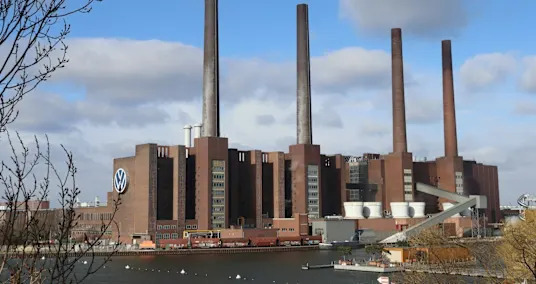
At the center of the discussion is Volkswagen’s Osnabrück plant in Lower Saxony, a site currently responsible for producing low-volume models like the Volkswagen T-Roc Cabriolet, along with Porsche’s 718 Cayman and Boxster. The problem is, those vehicles are nearing the end of their lifecycle, and production at the plant is expected to wind down by 2027.
That puts roughly 2,300 jobs at risk.
According to the report, the idea behind the potential shift is straightforward: keep the plant alive by giving it a new purpose. Instead of assembling vehicles, the facility would transition to producing support systems tied to air defense — specifically transport platforms and power-related components connected to Iron Dome operations.

It’s important to draw a clear line here. The proposal, as described, does not involve Volkswagen manufacturing missiles or weapons directly. The focus would be on auxiliary systems — the infrastructure that supports defense equipment rather than the weapons themselves.
Even so, the concept marks a significant departure from Volkswagen’s identity as a civilian automaker.
The reported discussions are said to involve Rafael, a state-owned Israeli defense company with decades of experience in advanced military technology. The potential partnership is also reportedly being viewed as a way to stabilize operations at a plant that no longer has a long-term automotive product pipeline.
There’s also a broader economic angle. European manufacturers have been under increasing pressure, with shifting demand, rising costs, and the ongoing transition to electrification forcing difficult decisions about which factories remain viable. In that environment, repurposing an existing facility — rather than shutting it down — becomes an attractive option.
Still, Volkswagen is publicly distancing itself from the more dramatic interpretations of the report.
A company spokesperson, responding to inquiries, made it clear that Volkswagen does not plan to enter weapons production. The statement emphasized that manufacturing weapons remains off the table and declined to confirm any specific plans for the Osnabrück site.
LATEST POSTS
- 1
 Become the best at Discussion: 6 Procedures for Progress
 - 2The Solution to Individual budget: Dominating Cash The board
- 3Tragedy in Minnesota, vaccine news, Snoop's game call: Week in review
- 42 ways you can conserve the water used to make your food
- 5Anger as German family business group opens talks with far-right AfD


- 'The best gift ever': Baby is born after the rarest of pregnancies, defying all odds
- Watch Atlas V rocket launch its heaviest-ever payload early on April 4
- Flash flooding causes highways to close to and from Eilat
- Russia earning billions from Hormuz blockade, German trade body says
- Fireballs and a full moon. Here’s how to see two celestial events this week
- Progress Over Perfection: Lessons From Garment Factories Fighting Heat Stress
- Ukraine to get up to 100 French-made Rafale fighter jets
- Manual for Mountain Objections on the planet
- Unwinding the Starting points of America: An Excursion Through History